Feature
When Care Becomes a Choice

Shutterstock
A Catholic guide to making faithful medical decisions at the end of life.
When a loved one is seriously ill, families are often asked to make difficult decisions – about treatment, suffering and sometimes even the end of life.
What should we do? How far should treatment go? Are we helping – or prolonging suffering?
In those moments, the answers are not always clear. Yet many Catholics do not realize the Church has long offered guidance for exactly these situations – guidance rooted in the dignity of the human person and the compassion of Christ.
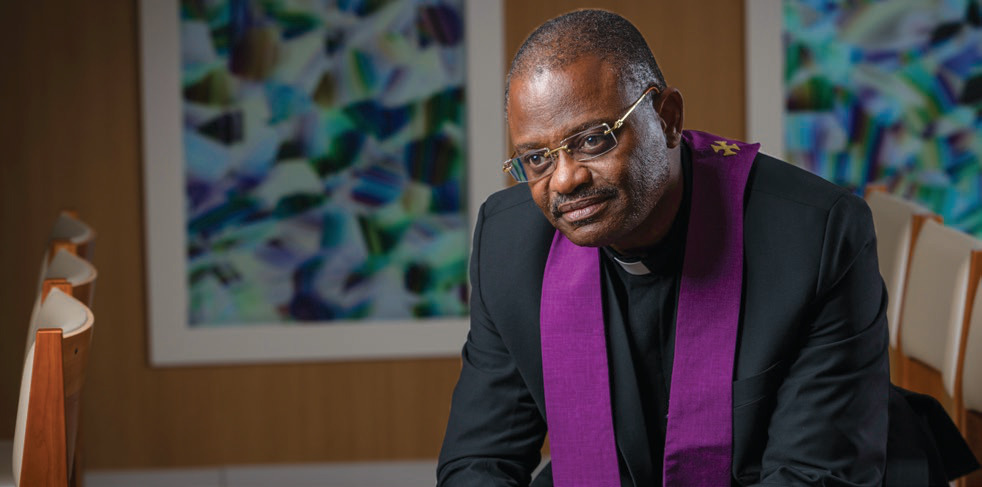
That guidance is reflected in the Ethical and Religious Directives for Catholic Health Care Services, Seventh Edition, published by the United States Conference of Catholic Bishops. For Father Leonard Chuwa, pastor of St. Paul Parish in Jacksonville and diocesan bioethics consultant, these teachings are not theoretical. After 24 years in hospital ministry, he has walked with countless patients and families through life’s most difficult moments.
Facing Fear at the End of Life
According to Father Chuwa, people approaching death often carry three deep fears: that their life feels unfinished, that they must leave behind everything they know and love, and the fear of the unknown.
“It is that fear of the unknown where the Church’s pastoral care becomes so important,” he said.
In those moments, “the role of the priest is not simply to administer sacraments, but to accompany – to listen, to show compassion and to help the person face death with peace and faith.”
This presence matters not only for the person who is dying, but for the family as well. Being present allows loved ones to reconcile relationships, say goodbye and find peace.
Yet many people reach the end of life alone, without support.
“That is where the Church must respond,” Father Chuwa said, pointing to the importance of priests and parish ministries that visit the sick, bring Communion and offer companionship.
At St. Paul Parish, that effort takes the form of Serving Our Sick, where parishioners accompany those who are ill, pray with them and maintain relationships with both patients and their families.
“They bring the love of Christ to those who are suffering,” he said, “and in return, they often discover that they receive far more than they give.”
Caring for the Whole Person
Catholic health care recognizes that illness is not only physical, but also psychological, social and spiritual.
The Church’s approach reflects the healing ministry of Christ, who cared for the whole person – body and soul. This is why pastoral care and the sacraments are essential.
Father Chuwa emphasized the importance of Reconciliation, the Anointing of the Sick and, when possible, Viaticum – Holy Communion given at the end of life, often referred to as “food for the journey.”
“These are not just rituals,” he said. “They prepare the person spiritually and help them be at peace.”
Making Difficult Medical Decisions
Modern medicine offers many options, but the Church teaches that not every option must be chosen.
A key distinction is between ordinary and extraordinary care.
Ordinary care refers to treatments that offer reasonable hope of benefit and do not impose excessive burden or expense.
Extraordinary care may be refused when it is overly burdensome or disproportionate to the expected outcome.
This allows families to make decisions that respect life without unnecessarily prolonging suffering.
But Father Chuwa cautioned that there is a line that must not be crossed.
“If a patient is actively dying, there comes a point when the body can no longer process food and fluids. At that stage, nutrition and hydration may become burdensome and even harmful, and they can be withdrawn,” he explained.
“However, if a person is still able to take food and water but chooses to stop in order to hasten death, that is not simply refusing treatment – that is choosing death – suicide.”
The Church teaches that life is a gift from God, and we are stewards – not owners – of that gift.
“We did not create ourselves,” Father Chuwa said. “Our lives are given to us, and we are called to care for them and return them to God with dignity.”
Walking the Fine Line with Compassion
Catholic teaching does not require that life be prolonged at all costs.
The Church strongly supports palliative care – care that relieves pain and improves quality of life while respecting human dignity.
This care addresses not only physical suffering, but emotional and spiritual needs as well.
For families, these decisions can be overwhelming – especially when they are asked to act as surrogates.
“Surrogates need to understand what the Church teaches,” Father Chuwa said. “They are often the ones making critical decisions about treatment and care.”
Without that understanding, families may feel pressured by medical recommendations or uncertain about what is right.
A Call to Be Prepared – and to Accompany
One of the greatest challenges, Father Chuwa noted, is that many Catholics are simply unaware of the guidance the Church provides.
“There is so much the Church can offer,” he said. “But we need to help people understand it before they are in crisis.”
That preparation includes conversations with family members, selecting a health care surrogate and seeking guidance from pastors ahead of time.
It also calls for a renewed commitment within parishes to care for the sick – not only through the sacraments, but through presence.
“Care for the sick is one of the fundamental requirements of the Gospel,” Father Chuwa said. “Our parishioners need to be helped to understand it, trained to do it and supported as they carry out this ministry.”
In the end, the question is not only what we do when someone is dying. It is how we accompany them – with faith, compassion and the assurance that they are not alone.
Before a Medical Crisis: A Catholic Guide
- Choose a health care surrogate – Select someone who understands your faith and values, and is willing to advocate for them.
- Know the difference between care and cure – You are not required to pursue every possible treatment.
- Understand ordinary and extraordinary care – Ordinary care is morally required. Extraordinary care may be refused when it is overly burdensome.
- Respect the dignity of life – Decisions should never intentionally cause death.
- Plan for spiritual care – Reconciliation, Anointing of the Sick and Viaticum are essential.
- Talk with your family now – Do not wait for a crisis to communicate your wishes.
- Stay connected to your parish – The Church’s care is not only sacramental, it is relational.
LEARN MORE: To learn more, and to download the Ethical and Religious Directives for Catholic Health Care Services, Seventh Edition, visit usccb.org.