Local Features
A Eucharistic Pilgrimage Begins Where Catholic Faith Took Root


A national Eucharistic pilgrimage will begin in St. Augustine as the nation approaches its 250th anniversary.
As the United States approaches its 250th anniversary, a national Eucharistic pilgrimage will begin in the nation’s oldest Catholic city, linking the earliest chapter of Catholic life in this land with a new generation of pilgrims carrying the Eucharist across the country.
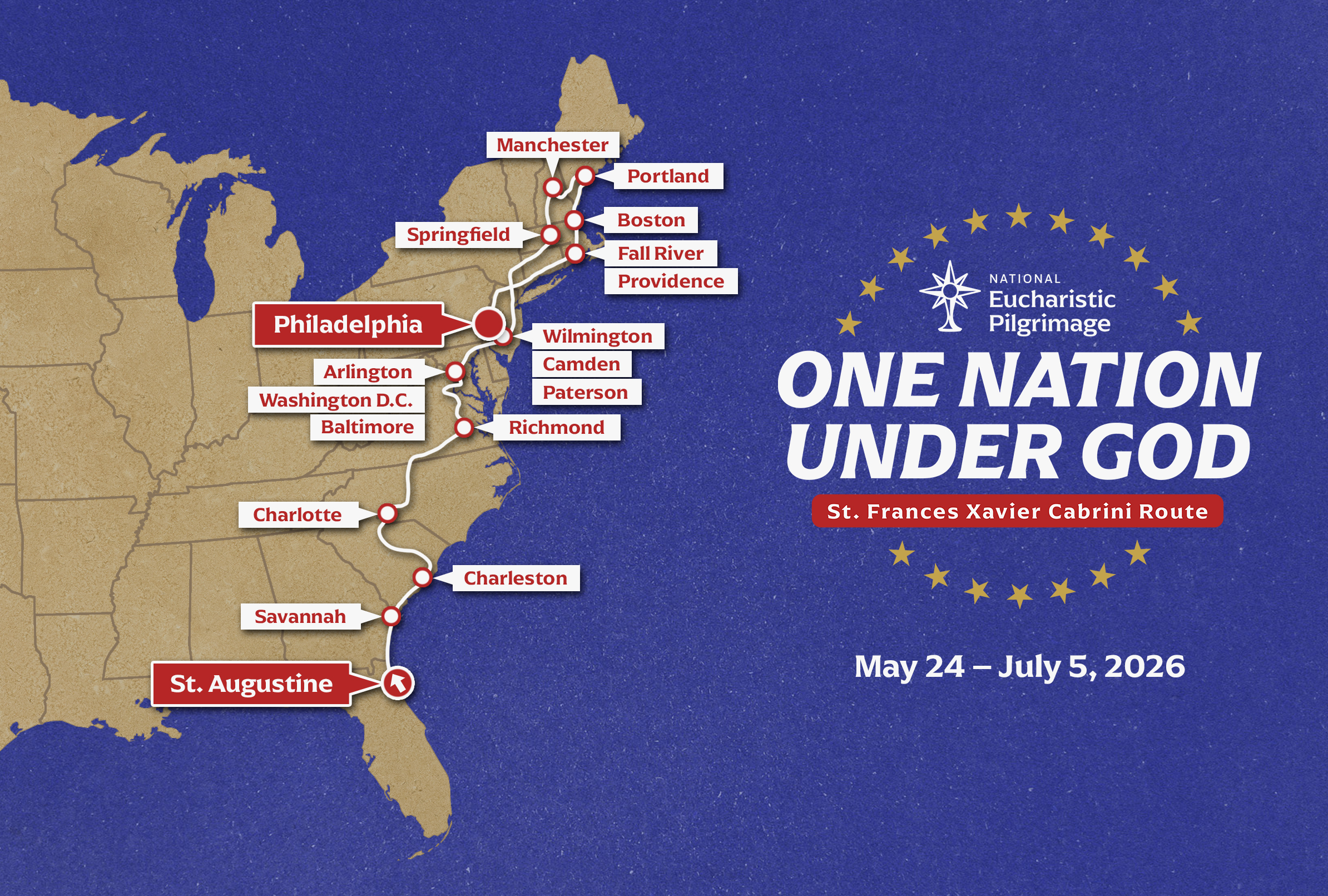
The 2026 National Eucharistic Pilgrimage will begin Memorial Day weekend at the National Shrine of Our Lady of La Leche at Mission Nombre de Dios in St. Augustine before traveling north along the East Coast and concluding in Philadelphia around Independence Day.
The pilgrimage will follow the St. Frances Xavier Cabrini Route, one of several Eucharistic pilgrimages organized as part of the National Eucharistic Revival. A small group of young adult “perpetual pilgrims” will accompany the Blessed Sacrament along the route, participating in daily Mass, Eucharistic adoration and processions in dioceses across the country.
For Bishop Erik Pohlmeier, beginning the pilgrimage in St. Augustine reflects the deep Catholic roots of the city.
“I was very excited when I was first contacted by the national office to begin the pilgrimage in St. Augustine,” Bishop Pohlmeier said. “As we celebrate the 250th anniversary of the signing of the Declaration of Independence, we want to recognize the faith that developed along with this country.”
The choice of St. Augustine highlights a pivotal moment in American religious history. On Sept. 8, 1565, Father Francisco López de Mendoza Grajales celebrated a Mass of thanksgiving shortly after Spanish settlers came ashore with Pedro Menéndez de Avilés to establish St. Augustine.
That Mass marked the beginning of Catholic life in what became the first enduring European-founded city in what is now the continental United States.
According to historical accounts, settlers processed to the site before the Mass was offered in thanksgiving for their safe arrival. The Eucharist was present at the very beginning of Catholic life in the future United States — a legacy that continues today at Mission Nombre de Dios and the National Shrine of Our Lady of La Leche.
“It is fitting that this pilgrimage begins where the Catholic faith first took root in this land,” Bishop Pohlmeier said. “The Eucharist has been present here since the earliest days of this community, and now a new generation of pilgrims will carry that same faith forward.”
Marian devotion also developed early at the mission, eventually giving rise to the Shrine of Our Lady of La Leche, one of the oldest Marian devotions in the United States. For generations, pilgrims have visited the shrine seeking the intercession of the Blessed Virgin Mary, especially couples praying for the gift of children and families seeking her maternal care.
Launching the Eucharistic pilgrimage from this location underscores the connection between the earliest Catholic presence in North America and the faith lived by Catholics today.
The Diocese of St. Augustine will host several events leading up to the launch of the pilgrimage. On Friday and Saturday, May 22–23, the National Shrine of Our Lady of La Leche will welcome pilgrims for prayer, liturgies and special events highlighting the historic Catholic roots of St. Augustine.
The national pilgrimage will officially begin Sunday, May 24, with Mass celebrated by Bishop Pohlmeier at the Shrine, followed by a Eucharistic procession through the historic grounds and onward to the Cathedral Basilica of St. Augustine.
While in the Diocese of St. Augustine, the pilgrims will also visit parishes that reflect the vibrant life of the local Church.
On Monday, May 25, the pilgrimage will travel to Christ the King Catholic Church in Jacksonville to celebrate the parish’s rich multicultural faith community. The pilgrimage will continue to St. Michael Catholic Church in Fernandina Beach. A Eucharistic procession will take place through the streets of the historic waterfront community before the Blessed Sacrament is carried by boat across the St. Marys River into the Diocese of Savannah.
From there, the pilgrimage will continue north through dioceses along the Eastern Seaboard, including Savannah, Charleston, Charlotte, Richmond, Washington and Baltimore before concluding in Philadelphia.
Along the way, pilgrims will participate in Mass, Eucharistic processions and encounters with Catholic communities, offering a visible witness to Christ’s presence in the Eucharist while reflecting on the role of faith in the nation’s past and future.