Faith Matters
Planting Seeds of Faith Through Beauty
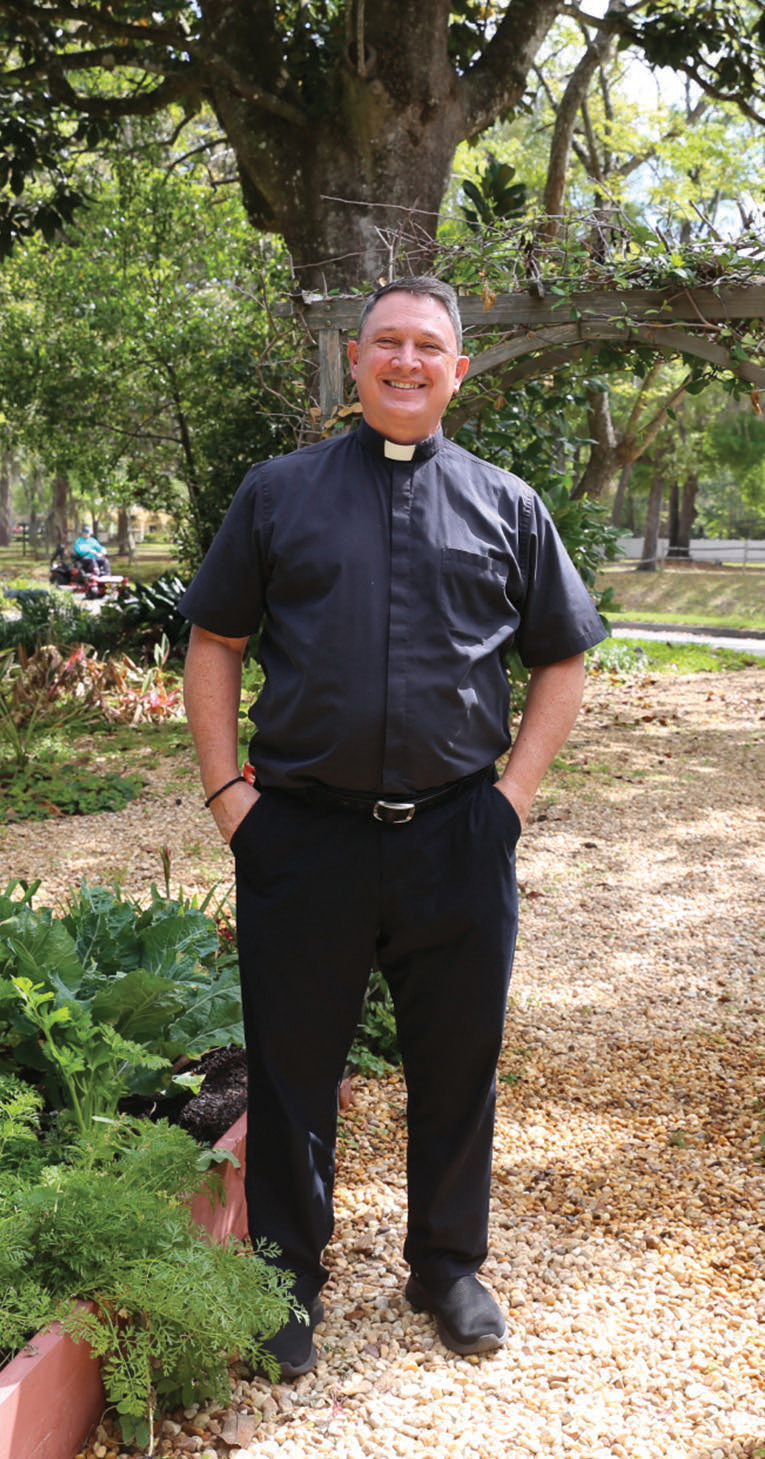
Father David Ruchinski, pastor of St. Joseph Parish, stands in their vegetable garden near the Mandarin Food Bank, where fresh produce is grown to serve the community.
Story and Photos by Anthony Richards.
Beauty has a way of reaching places words cannot.
In a culture where conversations about faith can quickly stall, a garden can open the door. At St. Joseph Catholic Church, Father David Ruchinski has discovered that tending the land can also tend the soul – creating a quiet but powerful path to evangelization.
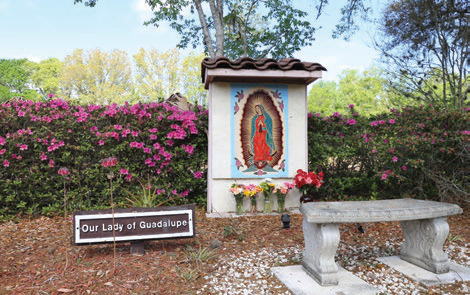
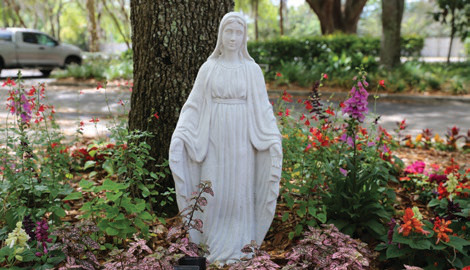
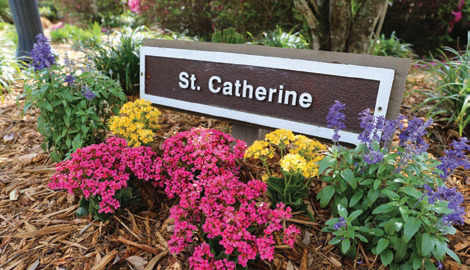
Across the parish grounds, nearly 80 landscaped “islands” are dedicated to saints. When Father Ruchinski arrived at St. Josephs, only about a dozen were actively cared for. Today, nearly 70 are adopted by parishioners, the result of a renewed effort that transformed occasional beautification days into a regular rhythm of parish life.
What began as a practical need has grown into something deeper.
For Father Ruchinski, the work is not simply about aesthetics. It is rooted in the Church’s understanding that beauty reveals God.
“When we speak of the things of God, many times people tune out,” he said. “They’ll say, ‘I’m spiritual but not religious.’ But beauty has a way of short-circuiting those defenses because it speaks directly to the human soul.”
He points to the Church’s tradition of the transcendentals – truth, goodness and beauty – as pathways to God.
“In the world we live in, there is a lot of debate about what is true and what is good,” he said. “But beauty draws people in. It creates an encounter. This is why the way of beauty is such a powerful way to evangelize today.”
His own journey into gardening began unexpectedly in 2021 while serving at St. Augustine Church and Catholic Student Center in Gainesville.
“Like a lot of people during the COVID pandemic, I got into home improvement projects,” he said. “We were working on a student center, and eventually I ran out of things to do inside.”
A conversation with a spiritual director shifted his focus outdoors. She noted how natural beauty can foster prayer, and when Father Ruchinski expressed a desire to improve the rectory grounds, she offered practical guidance.
“That’s what started it,” he said. “People began to notice right away.”
The transformation was striking enough to earn a neighborhood beautification award – an unexpected affirmation of what had begun as a simple experiment.
When he was later assigned to St. Joseph, parishioners in Gainesville wondered what would become of his gardens. The answer came quickly.
Walking the St. Joseph property for the first time, Father Ruchinski saw possibility.
Within his first week, he planted a small flower garden beneath a rectory window. From there, the work expanded. Irrigation systems were restored, allowing for new growth between the rectory and the Mandarin Food Bank building. Soon, a vegetable garden took root – one that would eventually provide fresh produce to those in need.
Today, that garden includes multiple beds producing lettuce, broccoli, tomatoes and Brussels sprouts. A chicken coop houses five hens, providing eggs, while a composting system returns nutrients to the soil.
The project reflects more than good stewardship of the land. It embodies a vision of parish life that is active, communal and outward facing.
Parishioners now regularly gather to care for the grounds, forming connections with one another while contributing to the beauty of the space. Visitors encounter a campus that invites reflection – walking paths, Marian gardens and spaces set apart for prayer.
For Father Ruchinski, the lessons of gardening mirror the spiritual life.
“Living things have a great capacity to surprise us,” he said. “Something will thrive in a place you didn’t expect – or it won’t. You can create the conditions for growth, but you don’t make it happen.”
That insight has shaped how he understands both ministry and evangelization.
“Gardening is a conscious act of hope,” he said.
It is also an act of trust that the seeds planted, both in soil and in hearts, will bear fruit in time.
In a world often marked by noise and division, the quiet witness of beauty offers another way forward. It does not argue or insist. It invites.
And at St. Joseph, that invitation is taking root – one garden, one encounter, one soul at a time.