Local Features
What Confirmation Candidates Share with their Bishop
Screenshot

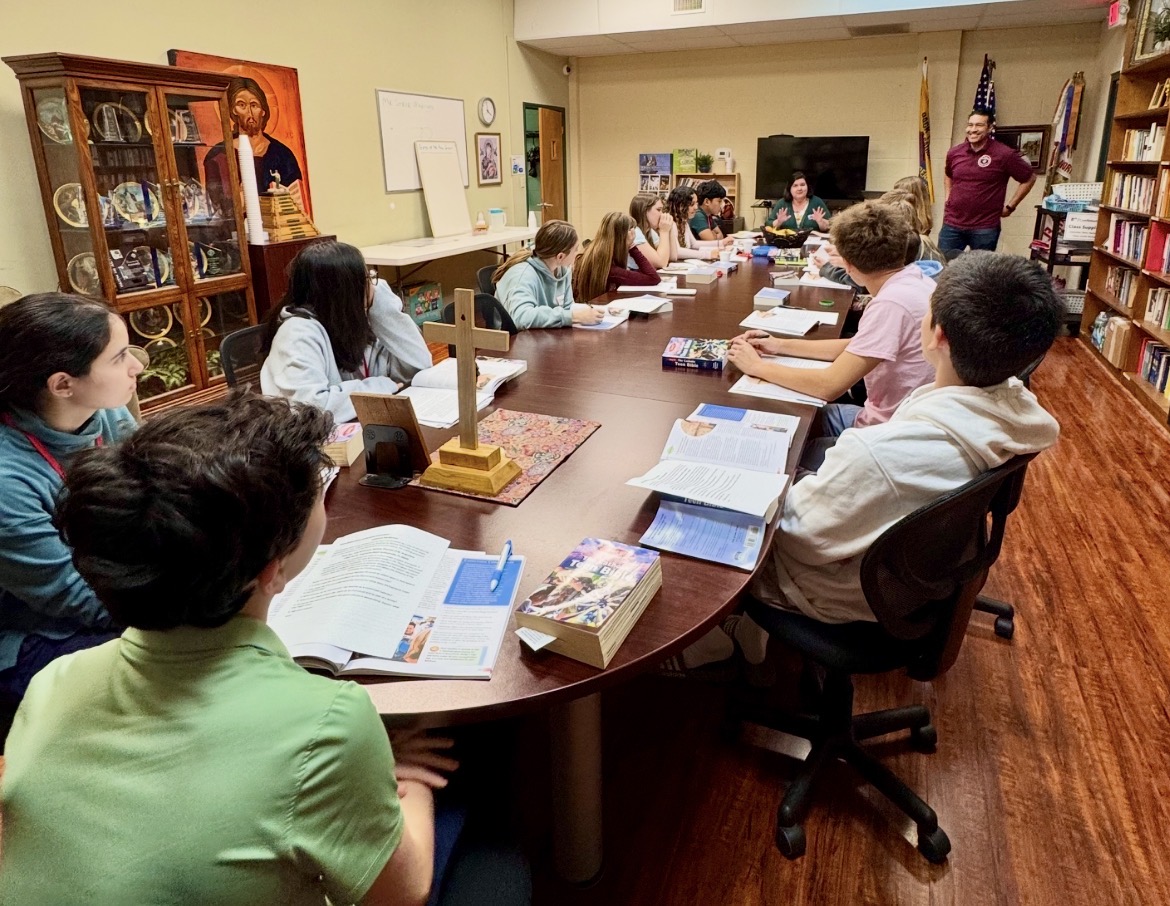
Samantha Matthews teaches the confirmation class at St. John the Baptist Catholic Church in Atlantic Beach.
Across the Diocese of St. Augustine, young people preparing to receive the sacrament of confirmation write a letter to Bishop Erik Pohlmeier as part of their preparation.
The letters offer a glimpse into the faith journeys of young Catholics — what they are learning, what they struggle with and how they are beginning to understand their relationship with God. For many candidates, the letter becomes an opportunity to pause and reflect on what their faith means to them as they prepare to take an important step in their spiritual life.
“The letters reflect what the kids are going through in their spiritual journey,” Bishop Pohlmeier said. “As I read them, I can see that something real is happening, and that gives me confidence. They can begin to feel the presence of God’s love, and that stands out in their writing.”
TiAnna McCabe, youth minister at Holy Faith Parish in Gainesville, has helped prepare confirmation candidates since 2007. During that time, she has seen three different bishops receive the letters, with slight adaptations made to the questions asked.
Among the questions Bishop Pohlmeier asks students to consider are: What does the Eucharist mean to you personally? And what will you do for the Church and society as a confirmed Catholic?
Many letters begin with candidates describing their interests in school or hobbies. McCabe said this helps make the letters more personal and allows students to open up about their faith.
“It helps them relax a little and write honestly,” McCabe said. “Once they begin sharing about themselves, it becomes easier for them to talk about their faith and what God means in their lives.”
One question that often arises is the appropriate age for confirmation.
Bishop Pohlmeier said that over the years he has found the current practice of celebrating confirmation in eighth grade works well because young people are mature enough to begin making meaningful connections in their faith.
Regardless of age, however, the bishop emphasized the important role parents play in the faith life of their children, especially in creating a home where a relationship with God is at the center and continues to grow after confirmation.
“A lot of young people are having an awakening to faith,” Bishop Pohlmeier said. “Parents need to understand the important role they have to ensure that awakening becomes a way of life.”
The bishop remembers his own father being deeply involved in his confirmation preparation, moments he still cherishes.
In reading the letters today, he has noticed that many of the struggles young people describe often mirror the challenges their parents and other adults face, though expressed in different ways.
“Sometimes the questions they raise are the same one’s adults wrestle with,” he said. “It reminds us that faith formation is not just for young people. It’s something we continue throughout our lives.”
Catechists say the letters can also help candidates better understand the meaning of confirmation itself.
“Many people can look at it like a checklist, so it’s important to take the time to explain why it all matters,” said Samantha Matthews, director of religious education at St. John the Baptist Parish in Jacksonville. “Then both parents and children begin to see the theology behind it. Confirmation is not just another graduation. It is a significant moment of faith and the beginning of the next step in their spiritual life.”
Matthews said it is important for those receiving confirmation to understand their spiritual journey does not end with the sacrament. The Church continues to offer opportunities to grow in faith and deepen one’s relationship with God.
Matthews converted to the Catholic faith at age 20 and has served as a director of religious education for the past eight years.
“I’m doing what I love, and I love what I’m doing,” Matthews said. “As DREs, we work with each pastor to understand his vision for the parish and try to bring that vision to life through faith formation.”
For McCabe, the letters serve another purpose as well — building a personal connection between the bishop and the young Catholics of the diocese.
“The letters are a great way for the bishop and the candidates to get to know each other,” McCabe said. “I love seeing the honesty and personality come through in their writing, and Bishop Pohlmeier has said he appreciates that as well. It becomes the beginning of a spiritual conversation that can continue long after confirmation.”
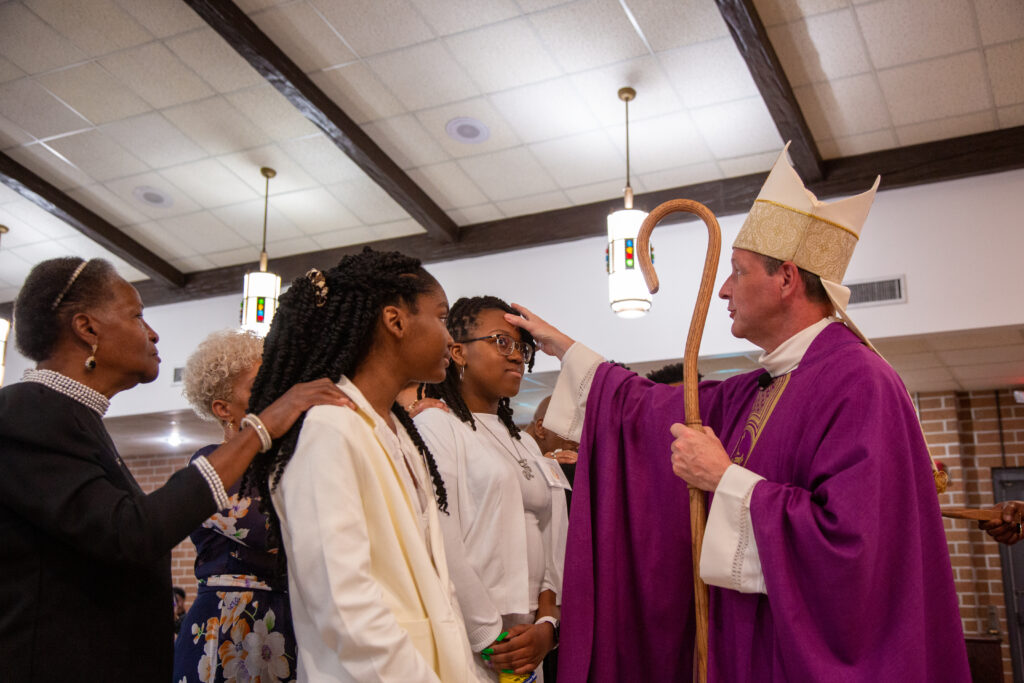
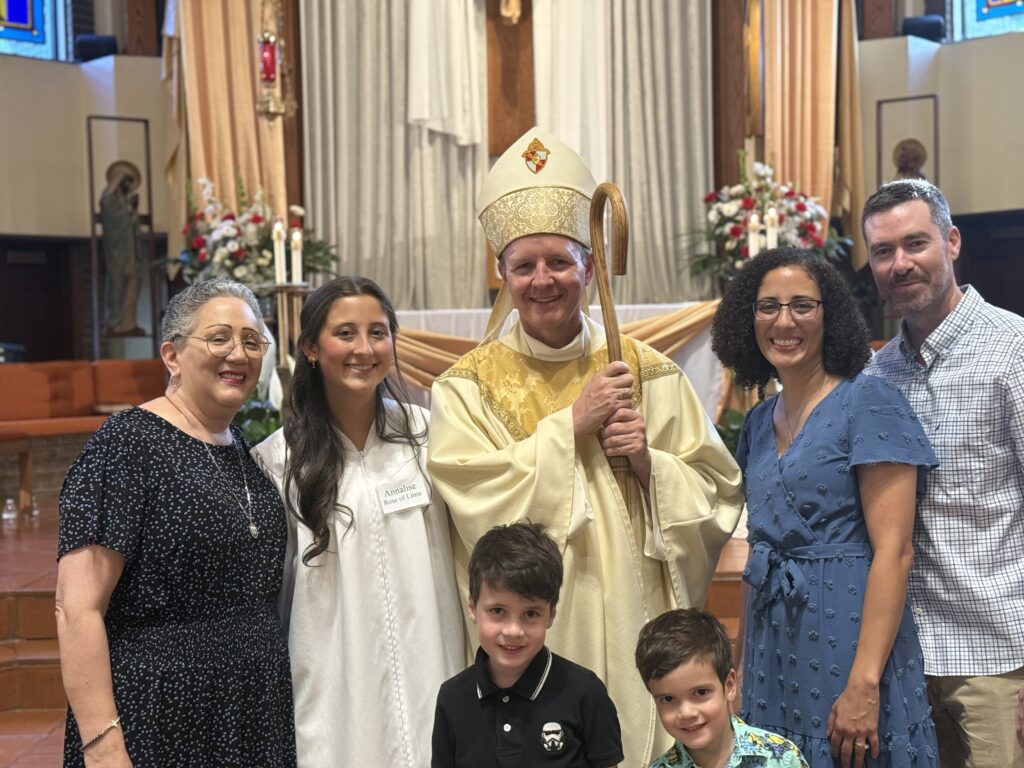
Photo by Woody Hubbard
Photo by TiAnna Rosario